Field reflection · English
The Living Springs of Sikkim: A Journey into Traditional Water Management and Community Wisdom
While serving at North Eastern Regional Institute of Water and Land Management (NERIWALM) on deputation, we had the opportunity to visit Sikkim and observe a traditional yet remarkably effective system of spring water management practised by the local communities. As an engineer having specialisation in the water resources engineering and management and working in the drinking water and sanitation sector, I have always been interested in understanding how people manage their water resources, particularly in difficult geographical conditions. However, what we witnessed in Sikkim was more than just a traditional method of collecting and distributing water. It was a beautiful example of how nature, traditional knowledge, community participation and simple engineering practices can come together to sustain human life. The mountains of Sikkim are blessed with numerous natural springs, locally known as Dharas. These springs are not merely sources of drinking water; they are deeply connected with the lives, culture, traditions and agricultural practices of the people. For many mountain communities, a spring is as important as a river is to people living in the plains. It provides water for drinking, cooking, irrigation, livestock and several other domestic needs. In fact, springs are the lifeline of many villages in the Indian Himalayan Region.
At first glance, a spring may appear to be nothing more than a small opening in the ground from which water continuously flows. However, the science behind its formation is quite interesting. A spring is generally the natural discharge point of groundwater. Rainwater and melting snow gradually infiltrate into the soil and move through underlying geological formations. A portion of this water gets stored underground in geological formations known as aquifers. When groundwater finds a natural opening or when the underground water table intersects the ground surface, water emerges naturally as a spring. Springs are supported by two major components: the watershed, which receives and allows rainwater to infiltrate, and the underground storage system, or aquifer, which stores and transmits the water towards the spring outlet. Both components are equally important for maintaining the flow of a spring. The quantity of water discharged by a spring depends on several factors, including the geological formations, soil characteristics, slope, vegetation cover and the amount of groundwater recharge. Therefore, any disturbance in the surrounding environment, such as deforestation, soil erosion, construction activities or excessive soil compaction, can affect the natural recharge process and eventually reduce spring discharge. This understanding is particularly important in mountain regions, where people depend heavily on springs for their daily water requirements.
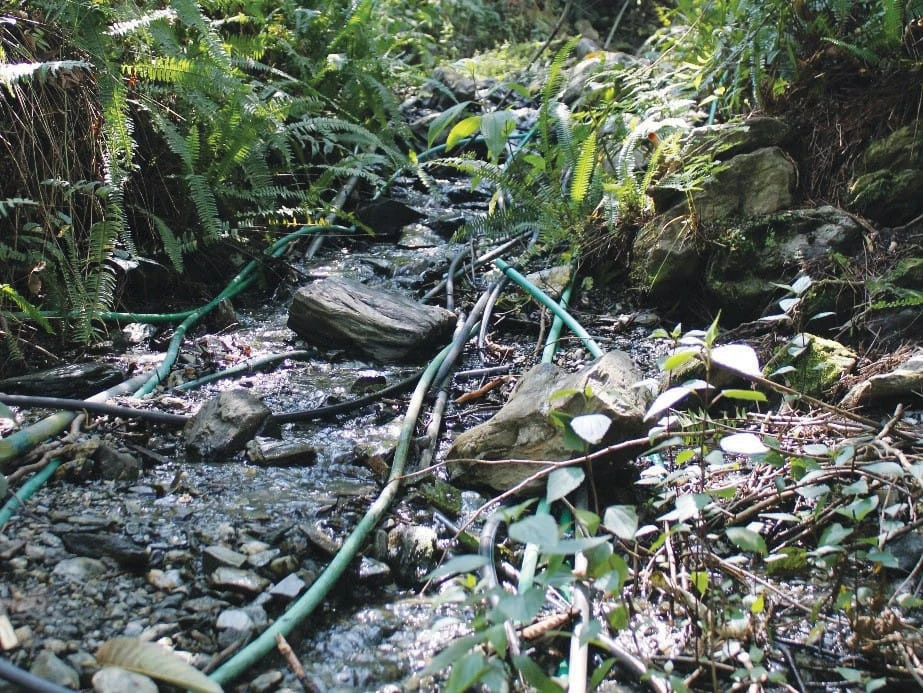
One of the most interesting things we observed in Sikkim was the way spring water was collected and distributed among households. Traditionally, people in many mountain villages used to collect spring water directly in brass or other metal pots. Over time, aluminium vessels and plastic buckets became more common. This practice still continues in several remote villages. However, Sikkim has developed a particularly interesting way of bringing spring water directly to individual households. Instead of making every family walk to the spring and collect water manually, the villagers have developed a simple pipe-based distribution arrangement. In earlier days, bamboo pipes were commonly used to carry water from the spring outlet. With changing times, these have largely been replaced by plastic pipes, which are easier to install, handle and maintain. At the spring outlet, we noticed several pipes arranged together, each drawing water towards a different household. What appeared to be a very simple arrangement was actually a practical example of decentralised water distribution. Another interesting feature was the use of perforated plastic bottles at the inlet of the pipes. These bottles acted as simple screening devices and prevented leaves, small stones and other unwanted materials from entering the pipelines. The inlet portions were further supported with sand and locally available rocks to keep them stable, particularly during periods of high discharge. From an engineering point of view, this arrangement was fascinating. There was no complicated infrastructure, no sophisticated mechanical equipment and no major energy requirement. The system worked primarily through gravity, making it economical and relatively easy for the community to operate. Interestingly, springs in Sikkim often emerge through multiple outlets rather than a single point. These outlets may occur at the same elevation or at slightly different levels. The villagers make use of these naturally available outlets to distribute water among several households. This arrangement reduces the need to concentrate the entire water supply at one collection point and helps serve the surrounding community. It was a valuable lesson in understanding how local communities adapt simple engineering solutions to the natural characteristics of their water source.
The importance of springs in Sikkim extends far beyond drinking water. They play an equally important role in supporting agriculture. Agriculture in the mountainous terrain is generally practised through bench terracing. Since the natural slopes are too steep for conventional cultivation, farmers carefully create relatively flat agricultural plots along the hillsides. These terraces are often arranged parallel to nearby streams or natural drainage channels. During our observations, we found that spring water was diverted towards agricultural fields through small channels constructed using locally available stones and other materials. After every two or three terraces, water was diverted into these channels to irrigate the fields. This practice is particularly useful during the monsoon season, when spring discharge generally increases. However, the situation becomes challenging during the winter and other dry periods. Spring discharge may reduce considerably, making it difficult for villagers to meet both domestic and agricultural requirements. To overcome this problem, communities have adopted another practical approach: harvesting and storing water during periods of availability. Rainwater and spring water are collected during the monsoon and stored in tanks for use during the lean season. Although the concept is simple, it demonstrates an important principle of water resource management, water should be conserved when it is available so that it can be used when it is needed most. This is particularly relevant for other hilly regions of the country, where seasonal variations in water availability often create serious challenges.
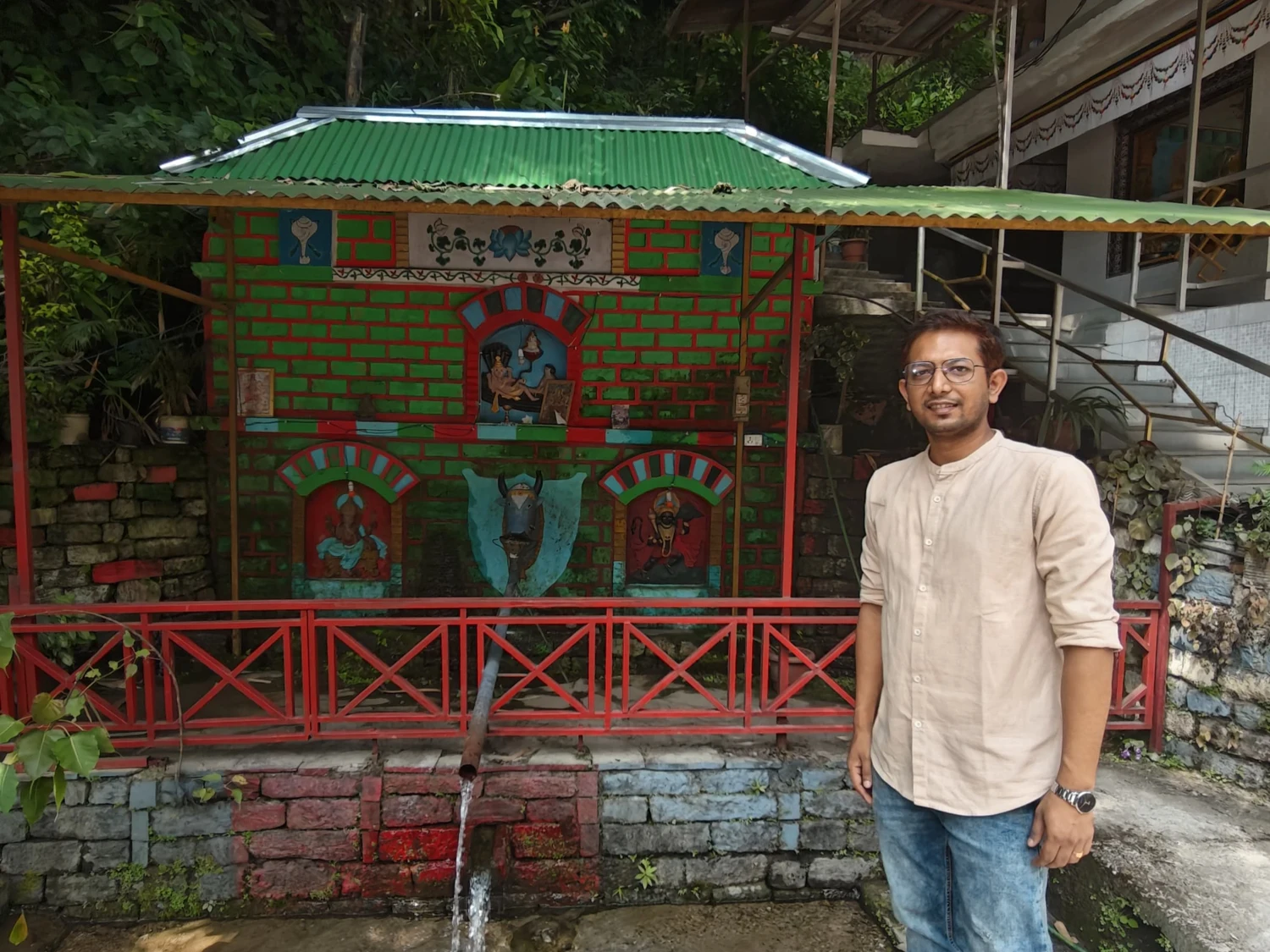
Perhaps the most beautiful aspect of spring water management in Sikkim is its close association with local culture and religious beliefs. During our visit, we came to understand that springs are not treated merely as physical sources of water. Many local communities consider them sacred and believe that they are the dwelling places of Devi, or the Goddess. Small temples, locally known as Devithan, are often constructed near spring sources. These places are treated with great respect, and people generally avoid activities that may pollute or disturb them. The forests surrounding many springs are also considered sacred. Interestingly, these forests often form the recharge areas of the springs. These forests are traditionally protected by local communities, and cutting trees or disturbing the surrounding natural environment is often discouraged through customary beliefs and practices. In modern environmental terminology, this traditional practice can be understood as a form of community-based protection or social fencing. What makes this system particularly interesting is that conservation does not depend entirely on government regulations or continuous monitoring by officials. Instead, people's faith and collective responsibility encourage them to protect the natural environment. During periods of prolonged dryness, communities also organise rituals such as Sansari Puja, seeking rainfall and the replenishment of springs. Although these practices are rooted in traditional beliefs, they reinforce a larger message, water is precious, nature deserves respect, and its resources must be protected. The exact customs may differ among different ethnic and tribal communities, but the underlying respect for springs remains common.
As engineers, we often discuss community participation as an essential component of sustainable water supply management. Sikkim offers a wonderful example of how community ownership can develop naturally through generations of cultural practices and traditional knowledge.
Despite their importance, many springs in Sikkim are gradually experiencing reduced discharge, and some have dried up completely. One of the major concerns is the changing pattern of rainfall. Traditionally, the region received relatively prolonged and low-intensity rainfall, allowing sufficient time for rainwater to infiltrate into the soil and recharge underground aquifers. However, changing climatic conditions have contributed to irregular rainfall patterns, including intense rainfall events. When heavy rain falls within a short period, a significant portion of the water flows away as surface runoff rather than infiltrating into the ground. Apart from climate change, several human activities have also affected the natural recharge process. Deforestation, forest fires, road construction, building activities, population pressure and soil erosion have disturbed the natural drainage and infiltration characteristics of many catchment areas. The consequences are serious. Springs that once provided water throughout the year are increasingly showing reduced discharge, particularly during the winter months.
According to the NITI Aayog report of 2018, Sikkim is among the Himalayan states where dependence on springs for drinking water is particularly significant. The report also highlights the decline in spring water availability due to climatic and anthropogenic pressures. This situation clearly indicates that merely improving the distribution network or constructing additional storage tanks will not be sufficient. Unless the natural sources of water are protected and rejuvenated, the long-term sustainability of mountain drinking water systems will remain uncertain.
Recognising the growing problem of drying springs, the Government of Sikkim launched an important initiative called Dhara Vikas during 2008–09. The programme was implemented by the Rural Management and Development Department (RM&DD), Government of Sikkim, it focuses on rejuvenating natural springs through a scientific approach known as spring shed management. This is an important distinction. While conventional spring water management generally deals with the collection, storage and distribution of water after it emerges from the ground, spring shed management focuses on the entire natural system that sustains the spring. A spring shed includes the recharge area, the underground aquifer and the spring discharge point. All three components are interconnected. Therefore, protecting only the spring outlet cannot ensure its long-term sustainability. The entire recharge area must also be protected and managed. The main objective of spring shed management is to improve groundwater recharge by increasing infiltration and reducing surface runoff. This is achieved through suitable soil and water conservation measures, protection of vegetation and treatment of the recharge area. One of the notable features of the Dhara Vikas programme was its emphasis on scientific understanding and local participation. The RM&DD partnered with the agencies like Advanced Centre for Water Resources Development and Management (ACWADAM) to develop local technical capacity. Para-hydrogeologists were trained and deployed, particularly in South and West Sikkim, to identify springs experiencing reduced discharge, understand their hydrogeological characteristics and identify suitable recharge interventions. This approach helped bridge the gap between scientific knowledge and ground-level implementation. Another important aspect was the involvement of local villagers through the Mahatma Gandhi National Rural Employment Guarantee Act (MGNREGA). The programme used the employment framework to provide wages to villagers participating in spring restoration activities. To guide the implementation, RM&DD also published an illustrated Dhara Vikas Handbook in 2014, presenting an eight-step, science-based protocol for spring revival. Subsequently, ICIMOD and ACWADAM, in consultation with The Mountain Institute (TMI) and other regional partners, refined the protocol to make it suitable for wider application across the Hindu Kush Himalayan region. The refined approach integrates hydrogeological assessment, socio-economic considerations and community-based governance. The initiative is particularly significant because it demonstrates that spring rejuvenation should not be treated as an isolated civil engineering activity. It requires a combination of geological investigation, watershed treatment, community mobilisation, institutional coordination and long-term monitoring.
Our visit to Sikkim gave me an opportunity to look at water management from a slightly different perspective. In conventional engineering practice, we often concentrate on developing infrastructure like intake structures, treatment plants, reservoirs and distribution networks. These are undoubtedly essential for providing safe and reliable drinking water. However, Sikkim's experience reminds us that the sustainability of any water supply system begins much before water reaches an intake structure. It begins with the protection of the natural source. A technically sound distribution network cannot remain sustainable if the source itself is gradually drying up. Similarly, constructing more storage infrastructure may provide temporary relief, but it cannot replace the need for adequate groundwater recharge. There are several lessons that other Himalayan and hilly states can learn from Sikkim.
First, traditional knowledge should not be ignored. Local communities often understand the behaviour of their springs, seasonal variations and surrounding catchments through generations of experience. This knowledge can be extremely useful when combined with modern hydrogeological investigations.
Second, spring conservation must be integrated with watershed development. Activities such as contour trenches, recharge structures, vegetation protection and suitable soil and water conservation measures can help improve infiltration, subject to the geological and hydrogeological suitability of the location.
Third, community participation must be central to every water management programme. People who depend on a spring should also feel responsible for protecting it.
Finally, we must look beyond the immediate infrastructure and understand the natural processes that sustain water availability.
A Thought to Carry Forward
As I reflected on my experience in Sikkim, one thought remained with me, sometimes the most effective engineering solutions are not necessarily the most complicated ones. A small pipe carrying water to a household, a small stone channel irrigating terraced fields, a protected forest above a spring and a community coming together to conserve its water source may appear to be simple practices. Yet, together, they represent a remarkably sustainable approach to water management. Sikkim has shown that traditional wisdom and modern science need not work separately. They can complement each other to address one of the most pressing challenges of our time.
And perhaps that is the most important lesson we brought back from the hills of Sikkim, to keep the water flowing, we must first learn to protect the land that stores it.